

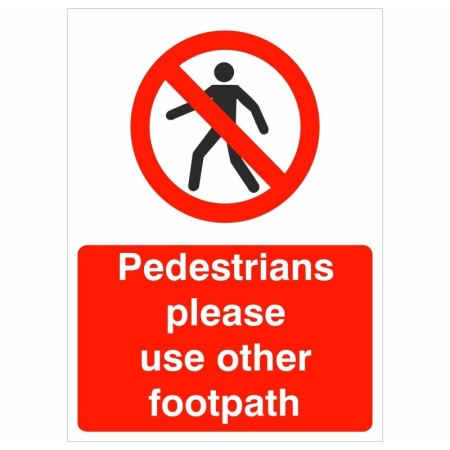

Pedestrians Please Use Other Footpath Sign
Direct pedestrians to an alternative route with this clear and highly visible footpath redirection sign.
• Purpose-built to instruct pedestrians to use another footpath
• Ideal for construction sites, roadworks, and temporary closures
• Bold text and prohibition symbol ensure high visibility and clarity
• Available in durable materials suitable for indoor and outdoor use
• Helps maintain safe pedestrian flow and reduces risk in restricted areas




Product Overview
This Pedestrians Please Use Other Footpath sign is designed to clearly redirect foot traffic when a walkway is closed, obstructed, or unsafe. Featuring a bold prohibition symbol alongside clear instructional text, it ensures pedestrians are immediately aware of restrictions and guided towards a safer alternative route. Ideal for maintaining safety and organisation in busy or hazardous environments.
Where to Use
- Roadworks and temporary footpath closures
- Construction and building sites
- Public walkways and pavements
- Event crowd control areas
- Industrial and commercial premises
Key Features
- Clear instruction to redirect pedestrian traffic
- Recognisable prohibition symbol for instant understanding
- Bold, high-contrast design for maximum visibility
- Helps prevent access to unsafe or restricted areas
- Suitable for a wide range of environments
Materials & Options
- Rigid Plastic (1mm)
- Rigid Plastic (2mm)
- Self Adhesive Vinyl
- Recyclable Correx ® (4mm)
Compliance
This sign supports compliance with UK health and safety regulations, including:
- Health and Safety at Work etc. Act 1974
- Safety Signs and Signals Regulations 1996
Frequently Asked Questions
Where should this sign be installed?
This sign should be placed at the entrance to closed or obstructed footpaths where pedestrians need clear direction to an alternative route.
Is this sign suitable for outdoor use?
Yes, it is available in durable materials suitable for both indoor and outdoor environments.
What does this sign indicate?
It informs pedestrians that they must not use the current path and should follow an alternative footpath for safety.