

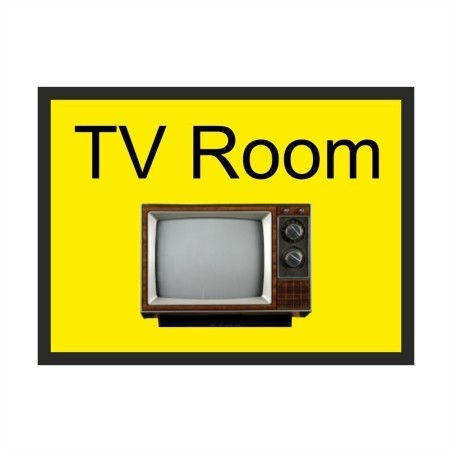
TV Room Dementia Door Sign
Clearly identify television and entertainment facilities with this dementia-friendly TV Room Door Sign designed to support confidence, independence and easy wayfinding.
• Clearly identifies TV room and entertainment facilities
• Ideal for care homes, hospitals, supported living environments and healthcare facilities
• High-contrast text and realistic television image provide excellent recognition
• Available in 1mm Rigid Plastic and Self Adhesive
• Supports independent navigation and reduces confusion for people living with dementia




Product Overview
The TV Room Dementia Door Sign is designed to help people living with dementia easily identify television and entertainment areas using clear text and a realistic television image. The high-contrast design supports recognition, reduces confusion and promotes greater independence in care homes, hospitals and supported living environments while providing clear wayfinding for residents, visitors and staff.
Where to Use
- Care homes
- Hospitals
- Residential care facilities
- Supported living environments
- Healthcare centres
Key Features
- Dementia-friendly high-contrast design
- Large, easy-to-read "TV Room" text
- Realistic television image for improved recognition
- Designed to support independent wayfinding
- Suitable for long-term indoor use
Materials & Options
- 1mm Rigid Plastic
- Self Adhesive
Compliance
This sign supports compliance with UK health and safety regulations, including:
- Health and Safety at Work etc. Act 1974
- Safety Signs and Signals Regulations 1996
Frequently Asked Questions
Where should this sign be installed?
Install it on or beside the entrance to the TV room where it is clearly visible to residents, patients, visitors and staff.
Is this sign suitable for healthcare environments?
Yes. It is suitable for care homes, hospitals, supported living settings and other healthcare environments where clear wayfinding is important.
What does this sign indicate?
It clearly identifies a TV room or entertainment area using simple text and a realistic television image to improve recognition and support people living with dementia.